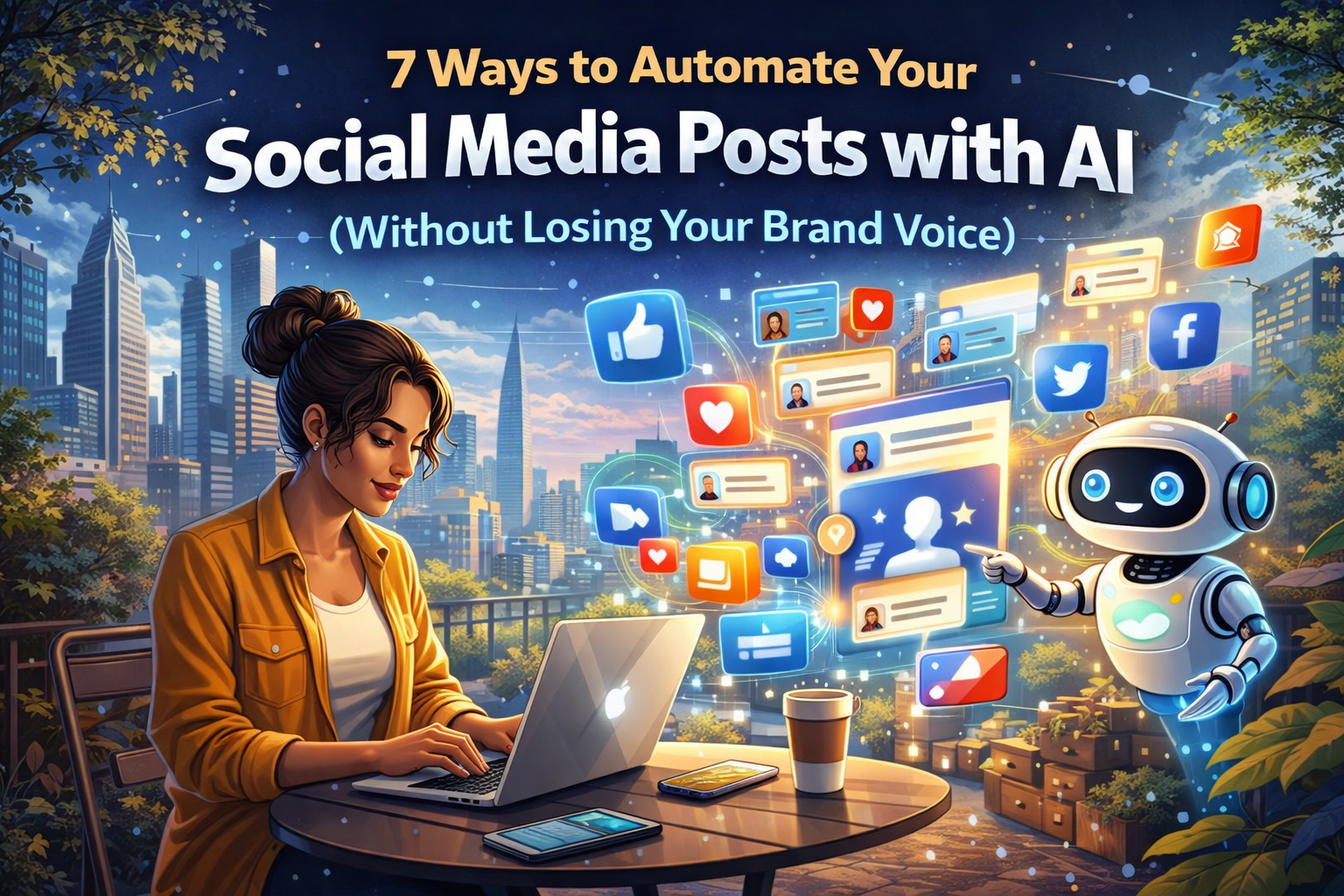
7 Ways to Automate Your Social Media Posts with AI (Without Losing Your Brand Voice)
How AI Can Simplify Your Social Media Routine
Managing multiple social media accounts can be overwhelming, especially when every platform demands regular posting, unique content formats, and consistent engagement. Artificial intelligence (AI) is transforming this reality by automating many of the time-consuming tasks that once required manual input. With the use of AI-driven tools, marketers and businesses can schedule posts, analyze performance, and even generate new content ideas within minutes.
AI tools can help streamline the process by suggesting optimal posting times, identifying trending topics in your niche, and recommending hashtags or keywords to enhance visibility. These tools can also monitor comment sections for sentiment and flag opportunities to engage with followers. Ultimately, the integration of AI can significantly reduce the number of repetitive tasks, allowing social media managers to focus on higher-level strategies and creative direction.
Aligning Automation With Your Brand Personality
Automation is powerful, but it must be carefully aligned with your brand’s voice and values. A company known for its friendly and conversational tone should ensure that AI-generated responses or posts maintain that same personality. The balance between efficiency and authenticity is key to building trust with audiences.
AI platforms allow users to input custom parameters or brand guidelines, which help maintain consistency across all automated interactions. For instance, you can train your AI assistant with examples of approved language, humor preferences, or stylistic nuances to prevent robotic or off-brand communication. When done correctly, automated posts feel genuine and human-like, reinforcing a brand’s connection with followers without sacrificing time efficiency.
Automating Content Scheduling for Maximum Reach
One of the most impactful benefits of AI in social media management is intelligent scheduling. Rather than relying on guesswork, AI algorithms use historical engagement data to determine when followers are most active or receptive to content. This ensures that each post is released at a time that maximizes reach, visibility, and engagement.
AI scheduling tools can automatically adjust posting times across different time zones and platforms. They can even test multiple posting windows to learn which combination yields the best results. With these capabilities, social media managers can maintain a regular posting cadence 24/7, ensuring continuous brand presence without manual oversight.
Using AI to Analyze Audience Interests in Real Time
Audiences evolve quickly, and what resonates today might not be effective tomorrow. AI gives marketers the advantage of real-time audience analysis, scanning millions of data points to detect shifts in interests or behavior. By tracking clicks, shares, comments, and trends, AI can forecast what content types or themes are gaining traction within your target demographics.
These insights go beyond basic analytics, enabling a deeper understanding of user motivations. For instance, if engagement spikes on posts about sustainability, the AI tool can suggest creating more eco-conscious content or collaborations. The ability to adapt instantly to audience feedback helps brands stay relevant and ahead of competition in the ever-changing digital landscape.
Turning Data Into a Personalized Posting Experience
Data-driven personalization is where AI truly shines. Instead of a one-size-fits-all approach, AI can craft tailored social media experiences based on each follower’s behavior. Through data modeling and audience segmentation, AI tools recommend specific content styles, tones, or media types to appeal to various audience segments.
This leads to more meaningful interactions. For example, a travel brand might serve different content to users interested in adventure trips versus luxury vacations. Personalized posts driven by AI not only increase engagement rates but also nurture stronger emotional connections with followers, as individuals feel recognized and catered to on a personal level.
Enhancing Visual Content with AI Tools
Visual content drives attention in the social media world. AI offers remarkable tools to generate, edit, and enhance visuals with impressive quality and speed. From automated background removal to color correction and design recommendations, AI-powered systems empower non-designers to produce professional-grade visuals effortlessly.
Moreover, with advanced generative AI technology, brands can create custom graphics, illustrations, and even short-form videos tailored to their campaign goals. Predictive algorithms can analyze what types of visuals perform best—such as certain color palettes, subject matter, or layouts—and advise future designs accordingly. The result is a cohesive, aesthetically consistent social media feed capable of standing out in crowded platforms.
Avoiding Common Pitfalls of Over-Automation
While automation saves significant time, over-reliance on it can lead to issues such as a lack of human touch or repetitive content. Audiences can quickly discern when content feels mechanical or impersonal. To avoid this, brands must monitor AI-generated posts regularly, integrating manual checks and creative input throughout the process.
It’s essential to balance technology and authenticity. Using AI as a supportive tool rather than a full replacement for human creativity helps maintain originality. Inject personal stories, respond to comments in genuine ways, and occasionally post in real time to remind followers that there’s a person behind the brand. This fusion of automation and authenticity keeps content compelling and relatable.
Integrating AI Chatbots for Better Engagement
AI chatbots have transformed how brands communicate with followers. They provide immediate responses, handle frequent inquiries, and guide users through purchasing or support processes. When programmed with natural language processing (NLP) capabilities, chatbots can maintain conversational tone and recognize user intent effectively.
Beyond answering questions, chatbots can proactively engage audiences by recommending products, inviting them to events, or offering personalized deals. This real-time responsiveness improves user satisfaction and strengthens customer loyalty. However, successful chatbot implementation requires careful design to ensure smooth conversation flow and avoidance of overly scripted replies. When used thoughtfully, chatbots can serve as an extension of your brand voice, providing seamless communication across platforms.
Testing and Improving AI-Generated Content
Optimization is a continuous process, especially when it comes to AI-generated social media content. Brands should regularly test different formats, tones, and media types to identify what resonates best with their audience. A/B testing, sentiment analysis, and feedback loops can help evaluate content performance and refine strategies accordingly.
Machine learning models improve over time as they are exposed to more data. By systematically reviewing metrics like click-through rates, engagement levels, and comment sentiment, AI tools can adjust their outputs to match evolving user preferences. Continuous human supervision ensures that AI learns the right lessons and maintains alignment with brand goals. The most successful social strategies merge data-driven insights with creative intuition.
Ensuring Ethical and Transparent AI Practices
With great technological power comes responsibility. AI-driven social posting must adhere to ethical standards that promote transparency and user trust. Users should be aware when interactions are facilitated by AI rather than humans, ensuring clear communication about automation’s role.
Data privacy is another central issue. Social media managers must ensure that AI systems respect user data and comply with relevant regulations like GDPR or other privacy laws. Avoid manipulative algorithms or deceptive engagement tactics that could exploit users’ behaviors. Instead, prioritize transparent, value-driven content generation.
AI should ultimately serve as a tool to elevate human creativity, not to deceive or manipulate. Ethical AI practices encourage long-term trust between brands and audiences, fostering sustainable digital relationships rooted in integrity and authenticity.
In conclusion, smart social posting with AI represents a dynamic blend of efficiency, creativity, and strategy. It streamlines daily tasks, amplifies engagement, and personalizes communication-all while giving marketers space to innovate. However, the human element remains indispensable. By maintaining brand voice integrity, ethical responsibility, and continuous improvement, businesses can harness AI’s full potential to transform their social media presence into a powerful, authentic, and future-ready digital experience.